Tuesday, August 16, 2022

Airelax Sleep Pad Review - 5 Stars

Is It Worth It for Camping?

Camping is a favorite of mine and I like to camp as much as possible. When you are out in the wilderness getting a good night sleep is key to a great day. After putting the Airelax inflatable sleeping pad to the test on a recent urban camping adventure, I’m giving it a solid 5-star review—and here’s why.

📺 Watch My Full Review: Airelax Sleeping Pad Review on YouTube
🛒 Shop the Pad: Airelax Sleeping Pad


Jeep Momma in her tent with the airelax sleeping pad.
Jeep Momma testing out the Airelax Sleeping Pad

Why I Recommend the Airelax Sleeping Pad

  • Quick and easy inflation (no mouth blowing)

  • Built-in pillows for extra comfort

  • Soft, durable fabric unlike standard air mattresses

  • Excellent insulation and support

  • Packs well for primitive camping or backpacking


My Real-Life Experience with the Airelax Sleeping Pad

As an avid camper and off-road enthusiast, I know how important a good night’s sleep is after a long day on the trail. Airelax sent me their inflatable camping mat to try, and I put it to use right away during an overnight tent camping trip.

Let me tell you—it didn’t disappoint.

The pad was easy to inflate with the included pump sack, and once set up, it offered impressive comfort, support, and warmth. I’ve used it both in my Jeep tent setup and at home in the guest room—versatile and reliable in every situation.


Key Features & Benefits of the Airelax Sleeping Pad

1. No-Fuss Inflation & Deflation

The Airelax pad includes a high-capacity pump sack—no need for extra tools or exhausting mouth-blowing. The dual-layer air valve ensures fast deflation in seconds and prevents leaks, so you don’t wake up on the ground by morning.


Manual blowing up the Airelax Sleeping Pad


2. Supportive Comfort for Better Sleep

At 3.54 inches thick, this sleeping mat keeps you elevated from cold, wet, or rocky ground. It’s firm enough to support your back yet soft enough to sleep on your side. Bonus—it doesn’t make that crinkly noise common in other sleeping pads.

3. Built-In Pillow Design

No more packing an extra pillow! The Airelax has integrated air pillows that support your neck and head. Combined with its wavy air bubble design, it adapts to your body whether you sleep on your back or side. I still bring my pillow though for my Glamping Experience

4. Durable, Soft Materials

This pad is made from tear-resistant nylon, peach suede, and eco-friendly TPU. What I really love is how the fabric feels—soft, suede-like texture instead of that sticky plastic feel of traditional air mattresses.


Who Should Buy the Airelax Sleeping Pad?

This sleeping pad is ideal for:

  • Primitive campers who need compact, durable gear

  • Jeepers and overlanders looking for packable comfort

  • Families hosting overnight guests

  • Backpackers needing lightweight, efficient gear


Final Verdict: Is the Airelax Sleeping Pad Worth It?

Absolutely. From quick inflation, silent comfort, and built-in pillows, to backpacking-friendly durability, the Airelax sleeping pad is a fantastic option for any camping setup.

If you’re looking for a reliable, comfortable pad for your next outdoor adventure or sleepover guest, this one should be at the top of your list. Plus, check out my other post Things you must do when you are camping! 


SPONSORED CONTENT DISCLOSURE

Occasionally Jeep Momma partners with brands and PR agencies to review products on this website and promote them via my social media accounts for which I receive free products and /or compensation. All views and opinions are my own. Please know I only post about products I believe would be helpful and useful. 


Sunday, August 7, 2022

The Birth of Jeep

Where It All Started

How a rugged 4x4 became an American icon

The "Go Anywhere, Do Anything" Jeep began as a military solution to a wartime problem then became a symbol of freedom, adventure, and American ingenuity. Before the Jeep was an off-roading legend or a beloved civilian vehicle, it was a battlefield hero that carried Allied soldiers across rugged terrain in the 1940s. Today, Jeep stands as an enduring American icon with an unmistakable silhouette and a culture all its own.


The U.S. Army’s Urgent Need

In 1940–1941, the U.S. Army needed a lightweight, low-profile, powerful reconnaissance vehicle with four-wheel drive. It had to be fast to produce, simple to repair in the field, light enough for troops to maneuver, yet rugged enough to survive war.

Three companies responded to the Army’s call:

  • American Bantam Car Company

  • Willys-Overland Motors

  • Ford Motor Company

All three were invited to design and build a pilot vehicle essentially a military prototype to compete for the final military contract.


The Birth of an Icon

After multiple rounds of testing, design revisions, and evaluation of each company’s strengths, the U.S. government selected Willys-Overland as the primary manufacturer in July 1941. However, because production needed to be massive and fast, the Army blended the best features of all three designs.

This combined design became the Willys MB, the unmistakable Jeep silhouette we know today flat fenders, slotted grille, folding windshield, and go-anywhere capability.

Fun fact: Much of the drivetrain expertise came from Bantam, while Ford contributed production efficiency and design refinements especially the iconic stamped grille.

For deeper insight into the origins, check out the Off Road Insiders Podcast:  Who Created the First Jeep

Related: The Birth of an Icon 


The Three Jeep Prototypes


Designed by Willys-Overland Motors in Toledo, Ohio, the Willys Quad stood out for its power. It was equipped with the now-famous “Go Devil” engine, capable of approximately 61 horsepower and 105 lb-ft of torque—impressive numbers for its time.

This engine gave Willys a decisive advantage, contributing heavily to their winning the Army contract.

There is still debate over how to pronounce Willys. I break it down in my post: How to Pronounce Willys. 


Willys Quad


Bantam Reconnaissance Car (BRC) – “Blitz Buggy”

American Bantam, based in Butler, Pennsylvania, built the very first Jeep prototype. Their design—nicknamed the Blitz Buggy—was lightweight and agile. Bantam collaborated with Spicer to develop axles and transfer-case components that continued influencing Jeep designs for decades.

Although Bantam lacked the manufacturing capacity to handle full-scale wartime production, their design DNA lives on in the Jeep lineage.


Blitz Buggy


Ford GP – The “Pygmy”

Ford’s prototype, called the Pygmy, offered strong production efficiency and refinements that the military appreciated. Two Ford pilot vehicles were built, both of which eventually ended up in museums. Unlike the Ford prototypes, the original Bantam and Willys pilot models are believed not to have survived.

The Ford designation GP is commonly misunderstood as meaning “General Purpose,” but it actually came from Ford’s internal coding:

  • G = Government contract

  • P = 80-inch wheelbase reconnaissance car


Pigmy


Learn More

Check out my Jeep Culture and History page for more stories, facts, and deep dives into Jeep heritage. 


FAQs About the Birth of the Jeep

1. Who actually invented the Jeep?

The Jeep was not invented by a single person or company. The first prototype was built by American Bantam, but the final production contract went to Willys-Overland, with additional manufacturing from Ford. The final Jeep design combined features from all three.

2. Why did the U.S. Army choose Willys for the final design?

Willys offered the most powerful engine the "Go Devil" and submitted a design that met the Army’s durability and performance standards. They also agreed to share their design with Ford to meet wartime production demands.

3. What does “Jeep” stand for?

The origin of the term “Jeep” is debated. Many believe it came from the slurred pronunciation of "GP" used by soldiers or from the cartoon character "Eugene the Jeep." Regardless of the story, the name stuck and became iconic.

4. What was the first civilian Jeep?

After the war, Willys released the CJ-2A in 1945. The “CJ” stood for Civilian Jeep, marking the start of Jeep’s transition from battlefield machine to everyday workhorse and recreational vehicle.

5. Did Ford really create the Jeep grille?

Yes, Ford introduced the stamped steel grille that later became a Jeep trademark. Willys adopted it because it was cheaper and faster to produce.

6. Why didn’t Bantam get the final contract?

Bantam created the first prototype but lacked the manufacturing capacity for large-scale wartime production. The Army needed hundreds of thousands of vehicles quickly, which required Willys and Ford’s facilities.

7. Did any of the original prototypes survive?

The two Ford Pygmy pilot vehicles survived and now reside in museums. The original Bantam Pilot and Willys Quad prototypes are believed to have been scrapped after testing.

8. What engine powered the first Jeep?

The Willys MB used the Go Devil 134-cu-in inline-4 engine. Reliable, simple, and easy to fix in the field, it delivered around 61 horsepower—small by today’s standards but exceptional during WWII.


Monday, June 20, 2022

What is the Jeep Trail Rated 4x4 Badge?

Freedom, Authenticity, Adventure & Passion


Quick Answer: What Do Jeep’s Core Values Mean?

Jeep’s core values Freedom, Authenticity, Adventure, and Passion represent more than a brand message. They define the Jeep lifestyle. These values reflect the ability to explore without limits, stay true to who you are, push beyond the pavement, and build meaningful connections through shared experiences. Every Trail Rated® Jeep is engineered to support these values in real-world conditions.

The Jeep brand is like no other out there. Jeep’s core values are freedom, adventure, authenticity, and passion. As Jeep owners throughout history, we have learned "Go Anywhere, Do Anything" is more than just a slogan - for Jeepers it’s our way of life. 

Watch more ➤➤ How the Jeep Trail Rated 4x4 Badge is Earned


Jeep 4x4 Trail Rated Badge
Jeep Trail Rated 4x4 Badge


Jeep Changed My Life

I have embraced that way of life and it has changed me. I have experienced amazing adventures, met some of the greatest people who are now my lifelong friends, and found my passion in all things Jeep. Those core values are a reflection of myself. It’s a connection like no other. 

Four Core Values

The Jeep Brand has embodied those four core values into the DNA of every Jeep they make. Not just the Wranglers and their predecessors but the Compass, Cherokee, Grand Cherokee, the Renegade and so many more. The one thing that ties all those Jeeps together is the Trail Rated 4x4 Badge and we need to appreciate ALL of those Jeeps because they all are so capable and unique in their own ways. Sometimes people joke about the badge, and you need to realize it’s not just a badge they stick on the Jeep. It is earned. 


Jeep Trail Rated Badge on my Jeep
Jeep Trail Rated 4x4 Badge

Trail Rated 4x4 Badge

Every Jeep vehicle with that Trail Rated 4x4 badge has succeeded against a series of grueling tests in five categories: TractionWater Fording, Maneuverability, Articulation and Ground Clearance. Trail Rated is an industry-leading methodology initially established by the Nevada Automotive Test Center (NATC) and Jeep Engineering to objectively measure off-road performance for all Jeep vehicles. 

4x4 Testing 

First the testing begins at Jeeps US Headquarters where the Jeeps endure the bitter angry cold weather in Northern Michigan. then it’s out to some of the most challenging terrain on earth. The Rubicon Trail located high in the Sierra Nevada Mountains, the Rubicon Trail is 22 miles of incredible rocky, grueling beautiful landscape. It’s a natural off-road adventure park populated by massive rocks and unforgiving boulders. Weather and constant use mean the trail is always changing to provide new challenges for vehicles hoping to be Trail Rated®.

Pushing to the Limits

Jeep says, "Pushing our vehicles as far as they can go is part of the Jeep Brand DNA.” They strive for groundbreaking capability so we as Jeep owners can pursue our exhilarating adventures. Jeep says their vehicles will continue to be tested to battle everything you may encounter.

If a Jeep vehicle is affixed with the trail rated badge you know it has passed the test in five performance categories. 

  • Traction that tells you that vehicle is capable to conquer some of the toughest terrain in mud, sand and on rocks. 
  • Water Fording features additional electrical and body sealing along with a high air intake to help you navigate streams and flooded underpasses. 
  • Maneuverability means that Jeep is capable to navigate narrow gaps, dodge emergency situations and avoid cosmetic damage thanks to precision steering and optimized wheelbases, which allow for expert navigation. 
  • Articulation means those trail rated suspensions enhance off-road performance maximizing flexibility, axle articulation and wheel travel. 
  • Ground Clearance is more than just the area under your Jeep when you drive over obstacles it also includes approach, break over and departure angles to ensure the vehicle can clear logs, rocks and uneven ground.

So remember the next time you see that trail rate 4x4 badge on your Jeep or other Jeeps know it’s not just a badge it’s a lot more! Jeep says they don’t make Jeep. We do. Revel in all things Jeep… that unstoppable spirit that makes our Jeep community and our Jeep experiences what it means to live the Jeep life.


FAQs: Jeep Core Values & the Trail Rated® Badge

What does “Go Anywhere, Do Anything” really mean?

“Go Anywhere, Do Anything” is more than a slogan—it reflects Jeep’s commitment to real capability. For Jeep owners, it means having the confidence to explore diverse terrain, tackle challenges, and pursue adventure without limitations.


Is the Trail Rated® badge just marketing?

No. The Trail Rated® badge is earned through extensive real-world testing conducted by Jeep engineers in extreme environments, including cold-weather testing in Michigan and demanding terrain like the Rubicon Trail in California.


Do only Jeep Wranglers earn the Trail Rated® badge?

No. While Wranglers are well known for off-road capability, other Jeep models—including the Cherokee, Grand Cherokee, Compass, Renegade, and Gladiator—can also earn the Trail Rated® badge if they meet Jeep’s performance standards.


Tuesday, March 29, 2022

Jeep Wrangler Oil Filter Housing Leak: Symptoms and Fix

An oil leak underneath a Jeep Wrangler can be alarming especially when the oil appears to be coming from the rear of the engine.

That is exactly what happened to me. I first noticed oil spots on my driveway and garage floor. When I crawled underneath my Jeep and saw oil covering the underside of the engine, my heart sank.

After sharing photos with a trusted Jeep friend and having the leak inspected by a local mechanic, I learned that the oil filter housing adapter was the likely source.

This is an issue every Jeep Wrangler owner with the 3.6L Pentastar engine should know about.

Quick Answer: Why Is My Jeep Wrangler Leaking Oil?

On a Jeep Wrangler equipped with the 3.6L Pentastar engine, oil collecting near the top or rear of the engine may be coming from the oil filter housing and oil cooler assembly.

The factory housing contains plastic components that can crack, distort or begin leaking around the seals. Oil can collect in the engine valley and eventually run down the rear of the engine, making the leak appear to be coming from the transmission or bellhousing area.

However, several engine components can leak oil. The source should be properly diagnosed before replacing parts.


Which Jeep Wranglers Can Develop This Leak?

This article focuses on Jeep Wranglers equipped with the 3.6L Pentastar V6, including:

  • 2012–2018 Jeep Wrangler JK and JKU models
  • Later Jeep Wrangler JL models equipped with a 3.6L engine

The exact housing design, part number and repair procedure can vary by model year. Verify compatibility using your VIN before ordering replacement parts.


Selfie with my new oil filter housing

Common Symptoms of an Oil Filter Housing Leak

Possible signs include:

  • Oil spots on the driveway or garage floor
  • Oil pooling in the engine valley
  • Oil running down the rear of the engine
  • Oil visible around the bellhousing or transmission
  • A burning-oil smell
  • Smoke caused by oil reaching hot engine components
  • A dropping engine-oil level
  • Oil around the filter housing or cooler assembly
  • Coolant loss in some cases

Because the oil starts high on the engine and travels downward, it can be mistaken for a rear main seal, valve-cover or oil-pan leak.

How I Discovered My Jeep’s Oil Leak

I first noticed oil spots where I regularly parked my Jeep. After crawling underneath it, I could clearly see that oil had spread across the underside of the engine.

I sent photos to a Jeep friend I trusted. He immediately said:

“That looks like the oil filter housing adapter.”

A local mechanic here in Minnesota inspected it and confirmed the diagnosis.

This was one of those moments when experience within the Jeep community saved me from chasing the wrong repair.


Looking up at my engine bay and the oil leak
Underneath my Jeep with oil leaking


Why the Pentastar Oil Filter Housing Can Leak

The oil filter housing and oil cooler assembly sits in the valley of the engine beneath the intake manifold. That location exposes it to repeated heating and cooling cycles.

Possible causes of a leak include:

  • Cracking or distortion of plastic housing components
  • Deteriorated seals or O-rings
  • Damage around the oil-filter cap
  • Excessive torque applied to the filter cap
  • Improper filter or O-ring installation
  • Age and repeated engine heat cycles
  • Damage during a previous oil change or repair

A leak in this area does not automatically mean the entire housing has cracked. The cap, seals, cooler and surrounding components should all be inspected.

Can the Housing Leak Both Oil and Coolant?

Yes. The housing and oil-cooler assembly handles both engine oil and coolant.

Depending on where the failure occurs, the assembly may leak:

  • Engine oil
  • Coolant
  • Both fluids

That is why unexplained oil or coolant loss should be investigated promptly.

Is It Safe to Drive With an Oil Filter Housing Leak?

I would not describe driving with this leak as safe based only on distance.

A small leak may not cause immediate engine damage, but the severity can change quickly. Continued driving can result in:

  • A dangerously low engine-oil level
  • Oil reaching hot components
  • Coolant loss
  • Engine overheating
  • Contamination of surrounding parts
  • Expensive engine damage

Check the oil level before starting the engine. If the oil-pressure warning appears, the engine is overheating, fluid is leaking rapidly, or the oil level is dangerously low, shut the engine off and have the Jeep towed.
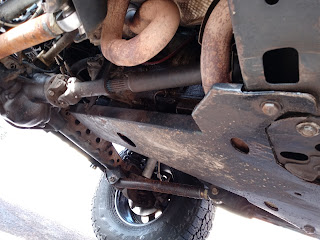
Oil Leak

Parts Availability During My Repair

Finding the right parts became one of the most frustrating parts of my experience.

At the time of my repair, I contacted three major auto-parts stores. The exact Mopar housing I was trying to purchase was unavailable, and the aluminum replacement I wanted was also backordered.

Because I needed my Jeep repaired, I ultimately used:

  • An aftermarket plastic oil-filter housing assembly: approximately $260
  • An intake-manifold gasket set: approximately $52

Those prices and availability reflect my repair at that time. Current prices, part numbers and inventory will vary.

Before taking the Jeep apart, confirm that you have:

  • The correct housing assembly for your model year
  • New intake-manifold gaskets
  • Any required seals or O-rings
  • The correct oil filter
  • Replacement oil and coolant, if needed
  • Manufacturer torque specifications

Plastic Versus Aluminum Replacement Housings

Some Wrangler owners replace the factory-style housing with an aftermarket aluminum assembly.

Potential advantages of aluminum

  • Removes the plastic housing body as one possible cracking point
  • May provide greater resistance to heat-related distortion
  • Can offer a longer-lasting repair when the part is well made and installed correctly

Important considerations

  • Not every aftermarket assembly has the same quality.
  • Poor machining or improper fit can cause new leaks.
  • Seals and O-rings can still fail.
  • Some assemblies may retain plastic components.
  • Correct installation and torque remain essential.
  • The part must match the Jeep’s exact engine and model year.

An aluminum housing can be a reasonable option, but I would not call it a guaranteed permanent fix.
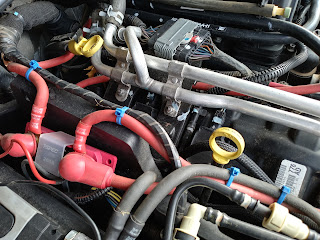
Inside the Jeep engine

What Is Involved in the Repair?

Replacing the housing is more involved than a routine oil-filter change because the assembly sits beneath the intake manifold.

The general process may include:

  1. Disconnecting the battery.
  2. Removing engine covers and intake components.
  3. Removing the upper and lower intake manifold as required.
  4. Cleaning oil from the engine valley.
  5. Removing the old housing and cooler assembly.
  6. Inspecting the surrounding area.
  7. Installing the new assembly and seals.
  8. Replacing intake-manifold gaskets.
  9. Reassembling everything using the correct torque specifications.
  10. Refilling and checking the oil and coolant.
  11. Running the engine and inspecting carefully for leaks.

This is not a full repair tutorial. Procedures vary, and mistakes can introduce debris into the engine, damage plastic components or create additional leaks.

How to Reduce the Risk of Future Problems

You may not be able to prevent every housing failure, but careful maintenance can reduce avoidable damage.

  • Use the correct oil filter and O-ring.
  • Replace the filter-cap O-ring during each oil change.
  • Install the O-ring in the proper groove.
  • Lubricate the new O-ring with clean engine oil.
  • Do not overtighten the oil-filter cap.
  • Follow the specified torque value for your model.
  • Inspect the housing area during oil changes.
  • Investigate unexplained oil or coolant loss promptly.
  • Avoid assuming that every leak near the bellhousing is a rear main seal.

A 2025 Stellantis bulletin for certain 3.6L vehicles also cautions that incorrect aftermarket filters or O-rings can contribute to leaks around the oil-filter area, reinforcing the importance of using compatible parts and installing them correctly.

My Jeep Momma Takeaway

This repair was frustrating, expensive and stressful, but it reinforced several important lessons:

  • Knowing common Jeep failure points matters.
  • A leak seen underneath the Jeep may have started much higher on the engine.
  • Proper diagnosis can prevent replacing the wrong component.
  • Jeep community knowledge can be incredibly helpful.
  • Checking fluid levels regularly can catch a problem before it becomes an engine failure.

Regular maintenance cannot prevent every component from failing. But knowing what to watch for can help you catch the problem sooner and avoid a much more expensive repair.


Frequently Asked Questions

What are the symptoms of a Jeep oil filter housing leak?

Common symptoms include oil pooling in the engine valley, oil running down the rear of the engine, spots underneath the Jeep, a burning-oil smell and a dropping oil level. Some failures may also cause coolant loss.

Can the leak look like a rear main seal problem?

Yes. Oil from the filter housing can travel down the rear of the engine and collect near the bellhousing, making it appear that the rear main seal or transmission area is leaking.

Can I drive with a leaking oil filter housing?

Driving with an active oil leak carries risk. Check the fluid level and leak severity immediately. Do not continue driving if the oil-pressure warning appears, the leak is rapid, the engine overheats or fluid levels are dangerously low.

Is an aluminum oil filter housing worth considering?

It can be. An aluminum housing removes the plastic housing body as one potential failure point. However, product quality, proper fit, seals and correct installation are still important.

Can an oil filter housing leak coolant?

Yes. Because the oil cooler assembly uses engine coolant, a failure in the assembly may result in oil, coolant or both fluids leaking.

How much does the repair cost?

The cost varies depending on the replacement assembly, local labor rates, model year and whether additional parts have been damaged. Your actual costs should remain in the personal-story section rather than being presented as current typical pricing.

Was there a recall for this problem?

I would direct readers to check their Jeep’s VIN through the official NHTSA recall lookup or contact a Jeep dealer. Recalls are vehicle- and VIN-specific, and recall status can change. NHTSA provides the official tool for checking current safety recalls.


Written by Tammy "Jeep Momma" Forsyth  - a Jeep Wrangler owner, off-road enthusiast, and content creator who has explored trails across Colorado, Wyoming, Arizona, Utah, and beyond. Through Jeep Momma, she shares firsthand Wrangler ownership experiences, trail guides, DIY modifications, camping setups, and Jeep community stories to help new and experienced Jeep owners get more from their adventures.

👉About Jeep Momma


Tuesday, March 22, 2022

Jeep Slang Words Explained: 10 Terms Every New Jeeper Should Know

Quick Answer: What Are Jeep Slang Words?

Jeep Slang words are terms commonly used by Jeep owners to describe off-road driving, vehicle parts, and trail situations. Learning this lingo helps new Jeepers understand trail communication and feel more confident in the Jeep community. A Jeep is not just a vehicle it’s a way of life.


My first women's wheeling day and the ladies posing with their Jeeps
My first women's wheeling day

🎥 Watch: Jeep Momma's Guides Jeep Slang Part 1 & Jeep Slang Part 2 to give you some basic Jeep Knowlege. 


Jeep Momma's Top 10 Jeep Slang Words


Droop 

Downward articulation, or how far the tires can reach below the vehicle.


Stuff 

Upward compression, or how far the tires can be pushed upwards into the wheel housing.


Naked 

 A term used to describe a Jeep with the top & doors off.


Oh shit handles 

Grab handles on the roll bars to hang onto while crawling thru the rocks.


Pumpkin 

The differential which is the device on the axle that splits the engine torque two different ways, allowing each output to spin at a different speed.


Wrenching 

When a group of Jeepers get together to work on a single Jeep or multiple Jeeps.


Wheeling 

Driving your 4x4 vehicle off-road with like-minded friends.


Flex 

The vehicle’s ability to flex its suspension where drooping on one side and  stuffing on the other while maintaining the ability to keep all four wheels on the ground when going over off road obstacles by means of axle articulation


Line  

A pathway designated by the driver giving them a sightline to the best possible route to overcome an obstacle or to travel on a specific pathway. Choosing the correct line is often essential to being a successful four-wheeler.


Stealership 

A derogatory term given to car dealerships where DIY drivers avoid purchasing parts due to them being  overpriced. I found since working in a dealership that isn't always true. 


❓ Frequently Asked Questions About Jeep Slang

Why do Jeep owners use slang?
Jeep slang helps drivers communicate quickly and clearly on the trail while building a sense of community.

Is Jeep slang the same across all off-road groups?
Some terms overlap, but many slang words are unique to Jeep culture.

Do I need to know Jeep slang to go off-roading?
No, but knowing common terms helps you feel more confident and included on the trail.


Tuesday, March 15, 2022

RIP Maggie May Jeep Wagoneer

Left to Rot in a Field

Maggie May was a 1980 Jeep Wagoneer left to live out eternity in a junkyard, until she was rescued back in 2019 to be restored to join me on my Adam's Extreme Adventure across the United States.

1980 Jeep Wagoneer, Maggie May
Maggie May 1980 Jeep Wagoneer


She was promised to be an epic build to take overlanding across America. Unfortunately, she never made that trip and didn't get to see any part of our beautiful country. They say promises are only as strong as the person making them. The person who promised to get Maggie May running in time wasn't able to make her engine sing so she sat alone in a single car garage while I spent 37 days overlanding across America. 


1980 Jeep Wagoneer, front view
Maggie May 1980 Jeep Wagoneer


Once I returned to Colorado, she was moved by her rescuer to a dirt field. Day by day the chances of her ever seeing the trails was growing dim. My eyes began to see her rescuer left a long string of broken promises from coast to coast and Maggie May was another broken promise. 

I always had hope those wheels see those rocky trails but instead she was picked apart like vultures eating a dead animal in the desert only leaving the carcass. Once again left to rot, abandoned in a field to die a lonely death. 

Side shot of Maggie May
Maggie May 1980 Jeep Wagoneer

I helped acquire many parts for Maggie May, new state of the
art headlights, top of the line front and rear driveshafts, and fancy new off road tires. Not to mention the financial help getting the engine up and running. I did hear the engine run once but never saw her driving on any road or trail. 


Interior of Maggie May
Maggie May interior

I guess boredom set in for her rescuer and she was slowly picked apart piece by piece until just her body sat on cement blocks among the weeds. 


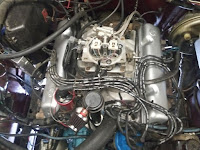
Engine inside Maggie May
Maggie Mays engine

Her engine went to California and still sits quietly in a garage. Will it ever run? We will never know. 


J-4000 truck that received some of Maggie May's parts
J-4000 Jeep Truck

The tires, one ton axles, driveshafts, performance shocks and headlights were installed on a 1971 J4000 Jeep Truck. Now in the hands of a new owner who will hopefully appreciate that Vintage Jeep. 


Interior of Maggie May
Maggie Mays interior

As for the interior build and body of Maggie May,  she sat alone in the corner of a farmers field for over a year. She was used up and tossed aside like a piece of trash, but she still had so much life left in her. I had so much hope for her. I hated knowing she was sitting out in that field waiting for life to fill up the beautiful vintage Jeep. 

The last I checked was about nine months ago and she still sat alone in that field. I was curious, so I recently checked with the former land lord. All I know is Maggie May was hauled off to the crusher, when there was some construction happening on the land. Parts were scavenged off her but we will never truly know the fate of this beauty we can only guess. 

This poor iconic American Jeep was discarded like a piece of garbage on the side of the road never to see those dirt roads like she was promised, her dreams crushed. It breaks my heart because there was so much potential for such an amazing journey with this Jeep. I know she was just a bunch of metal but when you become a Jeep owner you come to love them like they are real living breathing entities. 

Maggie May May You Rest in Peace! 


BeGrit Camping Cookware Set Review: Simple Gear for Jeep Camping

You don't need a giant camp kitchen or a Jeep packed full of expensive gear to enjoy camping. That's something I've come to appr...